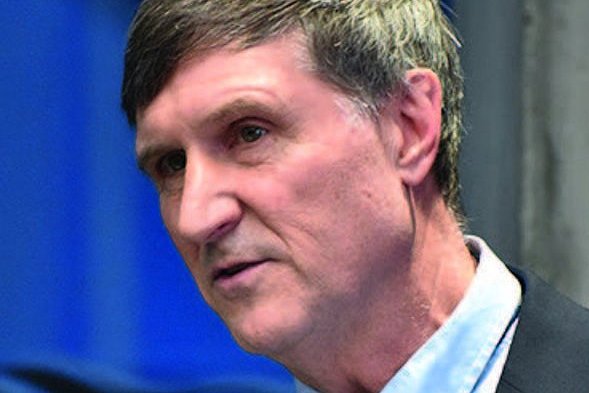
Kaj Hoernle was born in the United States but has German roots. He began his highly successful academic career by studying Geology, earning a Bachelor of Arts summa cum laude from the prestigious Columbia University in New York.
He then moved from the East Coast to the West Coast of the United States, where he completed a Master of Arts in Petrology at the University of California, Santa Barbara. He continued his studies at the University of California, Santa Cruz, earning a PhD in Geochemistry under the supervision of Charles Langmuir. Following postdoctoral appointments in Santa Barbara and Santa Cruz, as well as a research and teaching position at the University of California, Santa Barbara, Kaj Hoernle moved to GEOMAR in Kiel. There, he was appointed Professor of Petrology and Geochemistry at Kiel University in collaboration with what is now the GEOMAR Helmholtz Centre for Ocean Research Kiel.
Since 1994, Kaj Hoernle has led the Geochemistry and Petrology research group at GEOMAR, which also hosts the radiogenic isotope laboratories. The group is part of GEOMAR's research division focusing on ocean floor geodynamics and conducts research projects around the globe. The international nature of Kaj Hoernle's work is reflected not only in his numerous research expeditions but also in visiting appointments at the University of South Carolina (2009–2010) and Macquarie University in Sydney, Australia (2014–2015).
Kaj Hoernle's research group investigates the evolution of igneous rocks, with a particular emphasis on interactions between the lithosphere and the hydrosphere. Over several decades, his team has produced high-precision radiogenic isotope and trace element datasets for igneous rocks, with particular emphasis on the Sr–Nd–Hf–Pb isotope systems.
The primary focus of Kaj Hoernle's research is the study of mantle-derived rocks and their magmatic products. His work encompasses the formation and evolution of high-temperature oceanic basalts at convergent and divergent plate boundaries, as well as intraplate volcanism. This broad and complex research field has taken him to projects in every major ocean basin. Throughout his career, he has organized and led an impressive series of research expeditions as Chief or Co-Chief Scientist, including 39 research cruises dedicated to exploring the seafloor and collecting oceanic rock samples. The scientific value of the materials recovered during these expeditions will continue to underpin marine geoscience research for decades to come.
Particularly noteworthy is Kaj Hoernle's commitment to mentoring the next generation of scientists. He has supervised and guided more than 60 early-career researchers, both in the laboratory and aboard research vessels. The scope and impact of his research are reflected in more than 200 peer-reviewed publications, over 15,000 citations, and an h-index exceeding 70. Equally remarkable is the breadth of his scientific contributions. Although his work is rooted in igneous geochemistry, it clearly demonstrates the connections between magmatic processes, mantle dynamics, ore deposit geology, climate research, and biology. These interdisciplinary links form a recurring theme throughout his scientific career.
Among his most influential contributions are studies of the Messinian Salinity Crisis, the Hikurangi Plateau in the Pacific Ocean, and the Galápagos and Canary Islands. His research on the upper mantle beneath Central America, the central Atlantic, and Europe has significantly advanced our understanding of the links between mantle dynamics and large-scale tectonic processes. Many of his studies combine radiogenic isotope geochemistry with high-precision ^40Ar/^39Ar geochronology to unravel the interactions between plate tectonics, deep mantle processes, oceanic plateaus, and volcanic island chains.
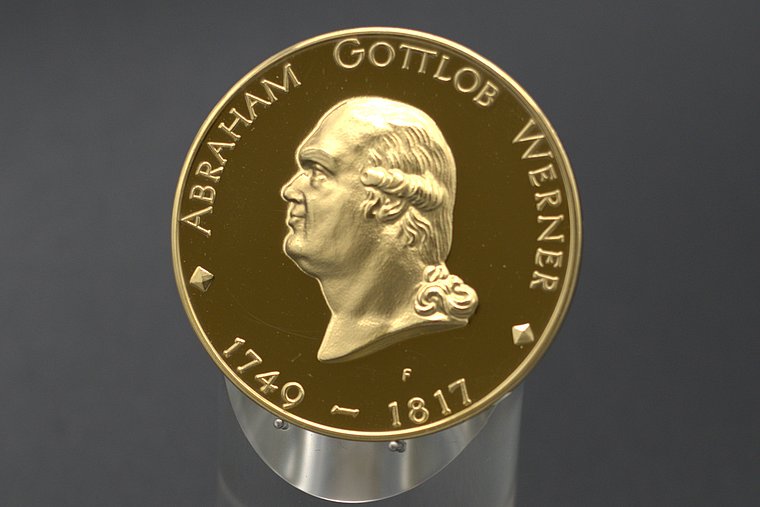
This year, the German Mineralogical Society honors an outstanding scientist whose international contributions to research, scientific service, and teaching have had a profound impact on the geosciences. His pioneering work in geochemistry transcends disciplinary boundaries, and his scientific legacy will continue to shape the future of marine geosciences for generations to come.
—
Oliver Nebel ∙ Clayton, Victoria (Australia)
(Photo: T. Eisenkrätzer)