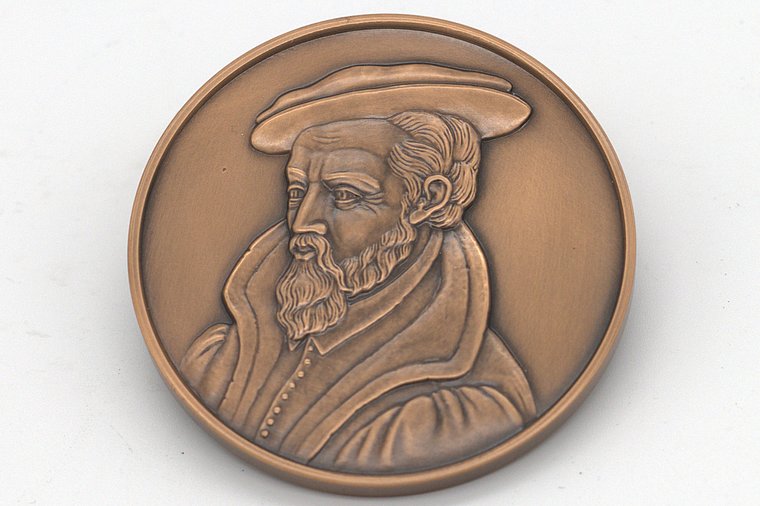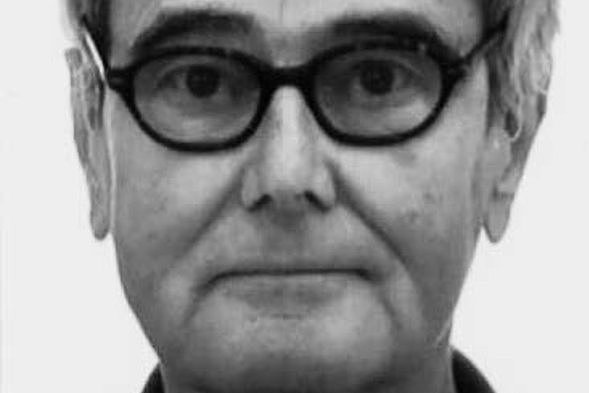
The DMG awards the 2022 Georg Agricola Medal to Professor Hartmut Schneider in recognition of his outstanding scientific achievements in the field of Applied Mineralogy.
Hartmut Schneider studied mineralogy at the University of Tübingen, where he received his diploma in 1969 and completed his PhD in 1971 with a dissertation on the deformation and transformation behavior of biotite. He subsequently served as Assistant Professor at the University of Karlsruhe before becoming Head of Department at the Institute for Refractories and Ceramics in Bonn in 1976. In 1986, he completed his habilitation at the University of Münster with a thesis on the synthesis, properties, and applications of mullite. From 1990 onwards, he headed the Ceramics Department at the German Aerospace Center (DLR) in Cologne.
During his time at the Research Institute of the Refractories Industry in Bonn and particularly as Head of the Department of Ceramic Materials and Composites at the DLR Institute of Materials Research, Professor Schneider made major contributions to the synthesis, structural and thermomechanical characterization, and application of oxide ceramics based on alumina and mullite, as well as their corresponding fiber-reinforced composites. Through these achievements, he became internationally recognized as one of the world's leading experts in the synthesis and characterization of mullite.
In addition to their fundamental scientific significance, his research made substantial contributions to the development of high-temperature-resistant ceramic matrix composites, with important current and future applications such as thermal protection systems for turbine combustion chambers.
Professor Schneider's scientific achievements are documented by more than 270 publications in leading international journals and by his editorship of two authoritative books on mullite, to which he also contributed several chapters. His work has received widespread international recognition, reflected in numerous honors, including the Japanese Government Research Award (1990), the Lilienthal Prize (Germany, 1995), election as Fellow of the American Ceramic Society (2000), and Fellowship of the University of Bremen (2013). In 2006, an international workshop on Mullite and Mullite Ceramics was organized in Vienna in his honor, with the scientific proceedings dedicated to him.
Throughout his career, Hartmut Schneider taught Applied Mineralogy and Ceramic Materials at the Universities of Hannover, Bochum, Cologne, Vienna, and Taipei (Taiwan), including appointments as a visiting professor. A central focus of his teaching was the mineralogical, crystal-chemical, and thermomechanical foundations of ceramic materials for applications in aerospace engineering and energy technology.
— Reinhard Fischer · Bremen