

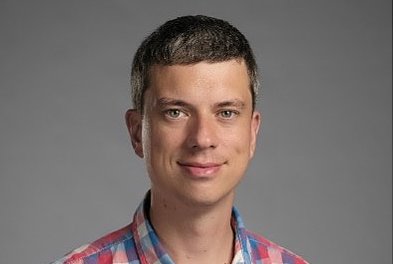
Daniel Vollprecht heads the “Applied Mineralogy” section of the DMG and holds the Chair of Resource and Chemical Engineering at the University of Augsburg. At the 2023 DMG Section Meeting of “Applied Mineralogy” and “Crystallography,” it was decided to launch an interview series to increase visibility, focusing on applied mineralogists and crystallographers. The interviews will be published on the DMG website and its social media channels. Proposed title of the series: “Insights into Mineralogy/Crystallography.” The aim is to enhance the visibility of applied mineralogy and crystallography within the DMG and beyond.
1. How did you come to your field, and what motivated you to specialize in it?
During my studies in mineralogy at the TU Bergakademie Freiberg, I chose to specialize in technical mineralogy because I was fascinated by how much mineralogy is embedded in the materials that surround us, such as ceramics, glass, or cement. During my doctoral research at the TU Graz, I began working on interactions between materials and the environment. For example, I synthesized zeolites and used them to remove heavy metals from acidic mine waters. Environmental protection has always been a key motivation for me—after all, there is no Planet B.
About ten years ago, I moved into the field of waste management at the Montanuniversität Leoben, where I was struck by the many connections to mineralogy. Mineral by-products such as metallurgical slags, and wastes such as incineration ashes, are valuable secondary resources on the one hand, but on the other hand, the heavy metals they contain pose environmental challenges. Using mineralogical methods, it is possible to assess whether these elements are stably bound or could be released into the environment. In the latter case, I find it particularly exciting to intervene in the formation processes of these “artificial rocks,” to influence mineral phase formation, and to immobilize heavy metals within stable mineral structures. As a professor at the University of Augsburg, I can now further advance this research and pass on my knowledge through teaching.
2. What are the biggest challenges in your field, and how do you deal with them?
At the interface of mineralogy and waste management, a highly interdisciplinary field emerges, involving stakeholders such as regulatory authorities, industry, recycling companies, and academia. Each brings different perspectives and prior knowledge, and legal, economic, scientific, and technical aspects must all be considered. As a mineralogist, I contribute my expertise on the role of mineral phases in environmental assessment, while also drawing on my diverse professional experience to bring different stakeholders together and work toward joint solutions.
3. What advice would you give to young people interested in your field?
Develop a solid foundation in analytical methods such as X-ray diffraction and microprobe analysis, and learn to apply them to a wide range of natural and synthetic materials. Attend workshops, such as the annual DMG workshop in Bad Windsheim, or conferences like the Berlin Conference on Mineral By-products and Waste. It is also worthwhile to consult textbooks on the topic, such as Minerals and Waste.
4. What is your favorite mineral?
Spinel. Minerals of this group occur in a wide range of geological environments, from ultramafic rocks to placer deposits, as well as in anthropogenic materials such as steel slags or batteries. Their relatively simple structure, combined with highly variable chemistry, controls properties such as chemical stability and hardness, and thus governs the behavior of spinels in both natural and engineered systems.
