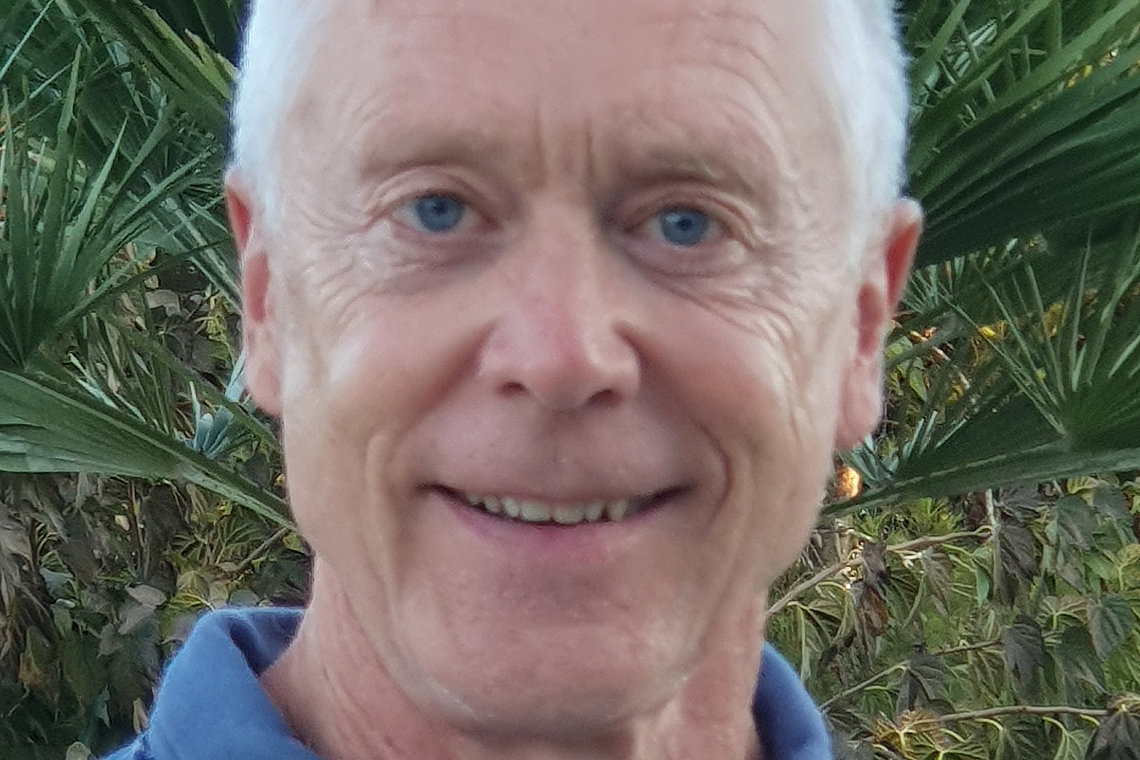
Professor Jens Götze began studying mineralogy and geochemistry at TU Bergakademie Freiberg in 1980. He completed his degree in 1985 with a diploma thesis on the mineralogy and geochemistry of aerosols (environmental dust). He subsequently remained at Bergakademie Freiberg and completed his doctorate in 1989 with a thesis entitled “Eduktanalyse Quarzsand Hohenbocka”. This marked the beginning of his research on quartz and SiO₂ polymorphs, which continues to this day. Despite the profound changes associated with German reunification, he was able to continue his academic career at TU Bergakademie Freiberg, becoming a research associate at the Institute of Mineralogy in 1992 and an adjunct professor in 2005. In 1999, he completed his habilitation with the thesis “Cathodoluminescence Microscopy and Spectroscopy in Applied Mineralogy”.
Jens Götze was also highly committed to university teaching. Until his retirement, he taught courses in technical mineralogy, polarising microscopy, mineral synthesis, and other subjects, and was recognised by students of the Faculty of Geosciences, Geoengineering and Mining as their most popular university lecturer. During his academic career, he supervised numerous theses and served as an external reviewer for universities in Germany and abroad. His many years of teaching also resulted in the textbooks “Einführung in die Angewandte Mineralogie” (2017; available in English since 2023) and “Physikalisch-chemische Mineralogie kompakt”, both co-authored with Matthias Göbbels, the latter also with Werner Lieber.
Jens Götze was among the first scientists to work with a hot-cathode cathodoluminescence microscope and soon became an internationally recognised expert in cathodoluminescence, particularly in the study of quartz and SiO₂ mineralisations. A major outcome of this research was the “Atlas of Cathodoluminescence Textures”, published in 2018, which follows the approach of applied mineralogy by addressing both natural minerals and synthetic materials.
In 2011, he organised the international colloquium “Mineralogy and Analytics of High-Purity SiO₂ Raw Materials” as part of the Berg- und Hüttenmännischer Tag (BHT). The event brought together more than 50 scientists from ten countries and covered the entire value chain, from natural quartz resources to their high-tech applications. This highly successful meeting resulted in the 2012 monograph “Quartz: Deposits, Mineralogy and Analytics”, his second comprehensive monograph on quartz following “Quarzrohstoffe” (1994).
Jens Götze also succeeded in combining his passion for agates with his scientific work. He published numerous scientific articles on agate research while successfully bridging the gap between scientific research and communication to a broader audience. His contributions attracted considerable attention not only in scientific journals but also among collectors and the wider public.
With his long-standing and internationally recognised research in crystal synthesis, quartz and SiO₂ research, and cathodoluminescence, his outstanding commitment to teaching, and his successful efforts to bridge the gap between science and the public, Professor Jens Götze is an exceptionally deserving recipient of the Georg Agricola Medal of the German Mineralogical Society.
Robert Möckel & Axel Renno ∙ Dresden-Rossendorf