

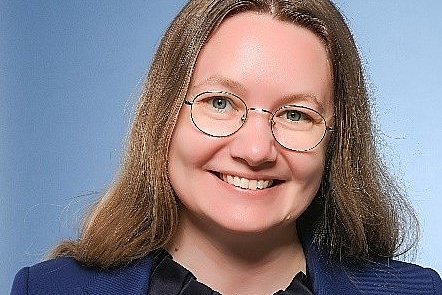
In every odd-numbered issue of GMIT, we continue the interview series launched in GMIT 95 featuring applied mineralogists and crystallographers. The series aims to introduce these fields and our Sections to the wider geoscience community.
In this issue, Elena Sturm from LMU Munich answers the editorial team’s questions. She has been Professor of Applied Mineralogy with a focus on geomaterials in technology and the environment since 2002. Her research focuses on the structure, formation, and properties of nanostructured and composite materials.
1. How did you become involved in your field, and what motivated you to specialise in it?
“D'où suis-je? Je suis de mon enfance. Je suis de mon enfance comme d'un pays.” Antoine de Saint-Exupéry (1942).
Both of my parents were biologists. They worked at a specialised research institute, so I grew up on the institute’s campus together with friends whose parents were also researchers there. While our parents’ plants flourished in the greenhouses, we ourselves grew up in the unique “microclimate” of a scientific campus.
Today, I tell my students that science is not simply a profession, but a way of experiencing life and of discovering and understanding the beauty of nature. This sense of discovery and wonder continues to shape my approach to research and teaching.
My field is applied mineralogy and crystallography. My path began with studying chemistry, but I became fascinated by minerals and their formation early on. My diploma thesis already focused on biominerals and crystallisation processes. During my doctorate in mineralogy and crystallography, my research shifted towards natural fossilised hard tissues as well as biomimetic and bio-inspired materials. Following my doctorate, I completed my habilitation in solid-state chemistry and materials science. This interdisciplinary education at the interface of chemistry, geosciences, and materials science has had a decisive influence on my scientific career.
I continue to be fascinated by how nature can produce materials with entirely different structures and properties from the same basic building blocks. Over the course of my research, I have expanded my interests to include nanostructured materials and the self-organisation of nanoparticles. I find it particularly exciting to investigate how nanoparticles assemble into ordered structures, known as mesocrystals, or into other hierarchical nanocomposites, thereby giving rise to entirely new properties. Biological hard tissues as well as natural nanominerals and structures such as framboids or precious opal also demonstrate impressively how nature creates complex materials with exceptional mechanical, optical, and functional properties through self-organisation. These natural models inspire us to develop new materials for applications in medicine, environmental technology, and materials science.
2. What are the greatest challenges you encounter in your field, and how do you approach them?
One of the greatest challenges is to fully understand the complex formation processes, structures, and properties of natural materials. Many of these materials owe their exceptional properties not only to their chemical composition, but above all to their hierarchical organisation from the nano- to the macroscale. Reproducing these structures in a controlled manner, or even developing them further, is scientifically fascinating but also highly challenging.
We therefore work across disciplines, combining insights from chemistry, crystallography, mineralogy, physics, biology, and materials science. Using state-of-the-art analytical methods, we investigate the structures and formation processes of natural minerals, biological hard tissues, and synthetic materials. This understanding helps us develop bio-inspired materials with specific properties, for example biomimetic dental fillings and functional nanomaterials for applications in catalysis.
3. What advice would you give to young people interested in your field?
I would advise them to remain curious and courageous and to think beyond the boundaries of individual disciplines. Many of the most exciting discoveries occur where chemistry, biology, physics, geosciences, and materials science come together. Nature is an excellent source of inspiration in this respect. Over millions of years, it has developed fascinating and highly optimised materials and structures.
I would also encourage them not to shy away from interdisciplinary research, while at the same time recognising the importance of a solid foundation in the individual disciplines. Anyone who is open to new methods and enjoys understanding fundamental processes can certainly contribute to developing innovative materials and technologies for the future.
4. What is your favourite mineral?
My favourite mineral is magnetite. It occurs in nature in an astonishing variety of forms and has fascinating magnetic properties. I find it particularly interesting that magnetite not only records geological processes but can also be produced by organisms. Magnetotactic bacteria, for example, use tiny magnetite crystals to orient themselves along the Earth’s magnetic field. In addition, magnetite nanoparticles can be deliberately self-organised, opening up interesting possibilities for applications in medicine, including cancer therapy, as well as in sensor technology and environmental applications.
Claudia Weidenthaler · Mülheim an der Ruhr
