The German Mineralogical Society (DMG) has established the Doris Schachner Medal. It replaces the Abraham Gottlob Werner Gold Medal. There were two reasons for this renaming.
First, the hierarchy of the previous Abraham Gottlob Werner Gold and Silver Medals and the Agricola Medal (which is struck in bronze) never followed a particularly consistent logic. The second reason, however, is more significant. All DMG awards bear the names of men, as is probably the case in most other scientific societies. The only exception is the Beate Mocek Prize, which is awarded specifically to female scientists at the beginning of their careers.
The DMG Executive Board and Advisory Board concluded that this naming convention is no longer appropriate. We therefore proposed replacing the Abraham Gottlob Werner Gold Medal with a new medal named after a female mineralogist who had worked in the German-speaking world. A call for suggestions was issued via the DMG email list. The overwhelming majority of responses proposed Doris Schachner (née Korn, 30 May 1904 – 1 April 1988). This proposal was approved by the General Assembly on 2 September.
By highlighting a female mineralogist, the DMG wishes to provide a role model for the next generation. We want to demonstrate that pursuing a scientific career, which is often far from straightforward, is worthwhile regardless of gender. In doing so, we also emphasize that a modern scientific society such as the DMG strives for a future in which the people shaping the discipline reflect the diversity of society as a whole.
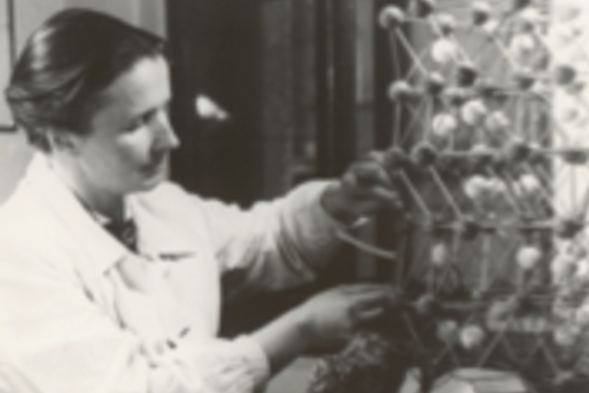
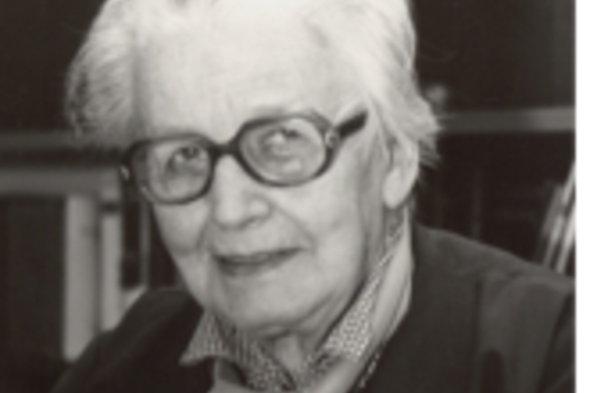
So, who was Doris Schachner? She was Germany's first female Professor of Mineralogy. After studying mathematics and the natural sciences in Heidelberg, Freiburg, and Innsbruck, she completed her doctorate in Heidelberg in 1928 with a dissertation entitled Tectonic and Structural Investigations of the Crystalline Basement of the Böllstein Odenwald. In 1929, she became an assistant to Paul Ramdohr at the Technical University of Aachen, where she developed the application of structural analysis to ore minerals. In 1933, she completed her habilitation in mineralogy, petrography, and economic geology.
In 1941, during the turmoil of the Second World War, she followed her husband to Brno. Doris Schachner was regarded as politically rather conservative, but she never joined the Nazi Party. In Brno, she was the only woman lecturer to receive a teaching appointment at the Institute of Mineralogy. In 1945, together with her two-year-old daughter Melitta, she fled the advancing Red Army and eventually returned to Aachen. There, she initially helped rebuild the destroyed Institute of Mineralogy. In 1949, despite considerable opposition from members of the professoriate, she was appointed Full Professor of Mineralogy, Petrography, and Economic Geology. From 1952 until her retirement in 1972, she served as Director of the institute.
Scientifically, Doris Schachner was a pioneer in the structural analysis of ore minerals. She devoted herself wholeheartedly to teaching and inspired generations of students through her enthusiasm and personal commitment. The so-called “Doris excursions” became legendary, representing both scientific and social highlights of studying in Aachen. She also worked tirelessly to secure funding for field excursions so that students with limited financial means could participate.
In the post-war period, she actively promoted reconciliation with Germany's neighboring countries by fostering cooperation between the universities of Aachen, Leuven (Belgium), and Maastricht (the Netherlands). She believed that political borders should not limit interactions between people. She chaired the Senate Committee for the International Office at RWTH Aachen and served on the German Research Foundation's Senate Commission for Geosciences. In addition, she was actively involved with the German Academic Scholarship Foundation and the Alexander von Humboldt Foundation.
Doris Schachner was awarded honorary membership of the DMG in 1981 and became an Honorary Senator of RWTH Aachen in 1984. The mineral Schachnerite (Ag₁.₁Hg₀.₉) was named in her honor. I had the pleasure of speaking at length with her daughter, Melitta Schachner Camartin, Professor of Neurobiology at the University of Hamburg and now Professor Emerita at Rutgers University (New Jersey, USA), who painted a vivid picture of her mother. During our conversation, we agreed that Doris Schachner perfectly embodied the purpose of the former Abraham Gottlob Werner Gold Medal: to recognize outstanding service in advancing the mineralogical sciences.
We look forward to presenting the first Doris Schachner Medal at GeoMin Cologne in September and hope to receive many inspiring nominations.
Friedhelm von Blanckenburg
DMG President