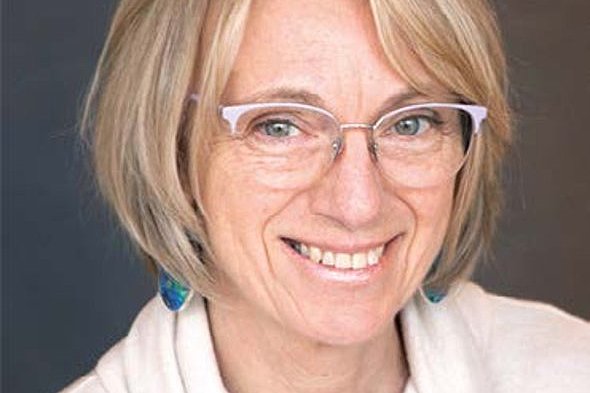
Kerstin Lehnert has been the driving force and a pioneering leader in the international geochemical community's efforts to make geochemical data FAIR—Findable, Accessible, Interoperable, and Reusable. Her work began 25 years ago with the development of the PetDB database for mid-ocean ridge basalt (MORB) compositions, alongside the GEOROC database, which focused on ocean island basalts. Building on these early initiatives, she established the EarthChem data platform, which today integrates several internationally curated databases, including GEOROC, PetDB, NAVDAT, GANSEKI, and USGS. These efforts laid the foundation for modern digital geochemistry and opened new avenues for scientific discovery.
In addition, Kerstin Lehnert conceived and established the International GeoSample Number (IGSN), recently renamed the International Generic Sample Number. This initiative has proven to be of outstanding importance, extending well beyond geochemistry and evolving into a reliable international system for the identification and registration of physical samples across many scientific disciplines. Promoting these initiatives required tireless international engagement, including extensive outreach at conferences, scientific societies, funding agencies, and publishing organizations. To support her group at the Lamont-Doherty Earth Observatory, she successfully secured long-term funding from the U.S. National Science Foundation (NSF) and NASA.
More recently, she developed the Astromaterials Data System for cosmochemical data, funded by NASA, and played a leading role in establishing the OneGeochemistry initiative, an international effort to connect and coordinate geochemical data initiatives worldwide. Its goal is to provide an ever-growing collection of curated, interoperable geochemical databases with consistent standards and high data quality. She has also been one of the driving forces behind COPDESS, an initiative that brings together publishers, editors, and the geochemical community to implement FAIR data practices in scientific publishing. Throughout her career, she has maintained close collaborations with German geoscience data initiatives, including GEOROC, DIGIS, GFZ Data Services, MetBase, and NFDI4Earth.
In addition to her earlier research in igneous geochemistry, Kerstin Lehnert has published extensively on FAIR data practices in geochemistry and cosmochemistry. She received her PhD in mineralogy from the University of Freiburg in 1989 under the supervision of Professor Jörg Keller and subsequently spent eleven years at the Max Planck Institute for Chemistry in Mainz in the research group of Al Hofmann. In 1996, she joined the Lamont-Doherty Earth Observatory, where she initiated the development of PetDB and the EarthChem platform.
Her achievements have received widespread international recognition. She received the Distinguished Service Award of the Geochemical Society in 2013, the Geological Society of America's Outstanding Contribution to Geoinformatics Award in 2017, and the European Geosciences Union's Ian McHarg Medal in 2018 for her outstanding contributions to geoinformatics and her pioneering commitment to open, transparent, and reproducible science.
The German Mineralogical Society honors her exceptional contributions to the advancement of FAIR geochemical data by awarding her the Doris Schachner Medal. Named after Doris Schachner, the first female professor of mineralogy in Germany (RWTH Aachen, 1949–1972), the medal recognizes outstanding service to the advancement of the mineralogical sciences. Through this award, the DMG recognizes Kerstin Lehnert's vision, determination, and lasting impact on the geosciences, honoring her as the first recipient of the Doris Schachner Medal in 2022.
— Gerhard Wörner · Göttingen